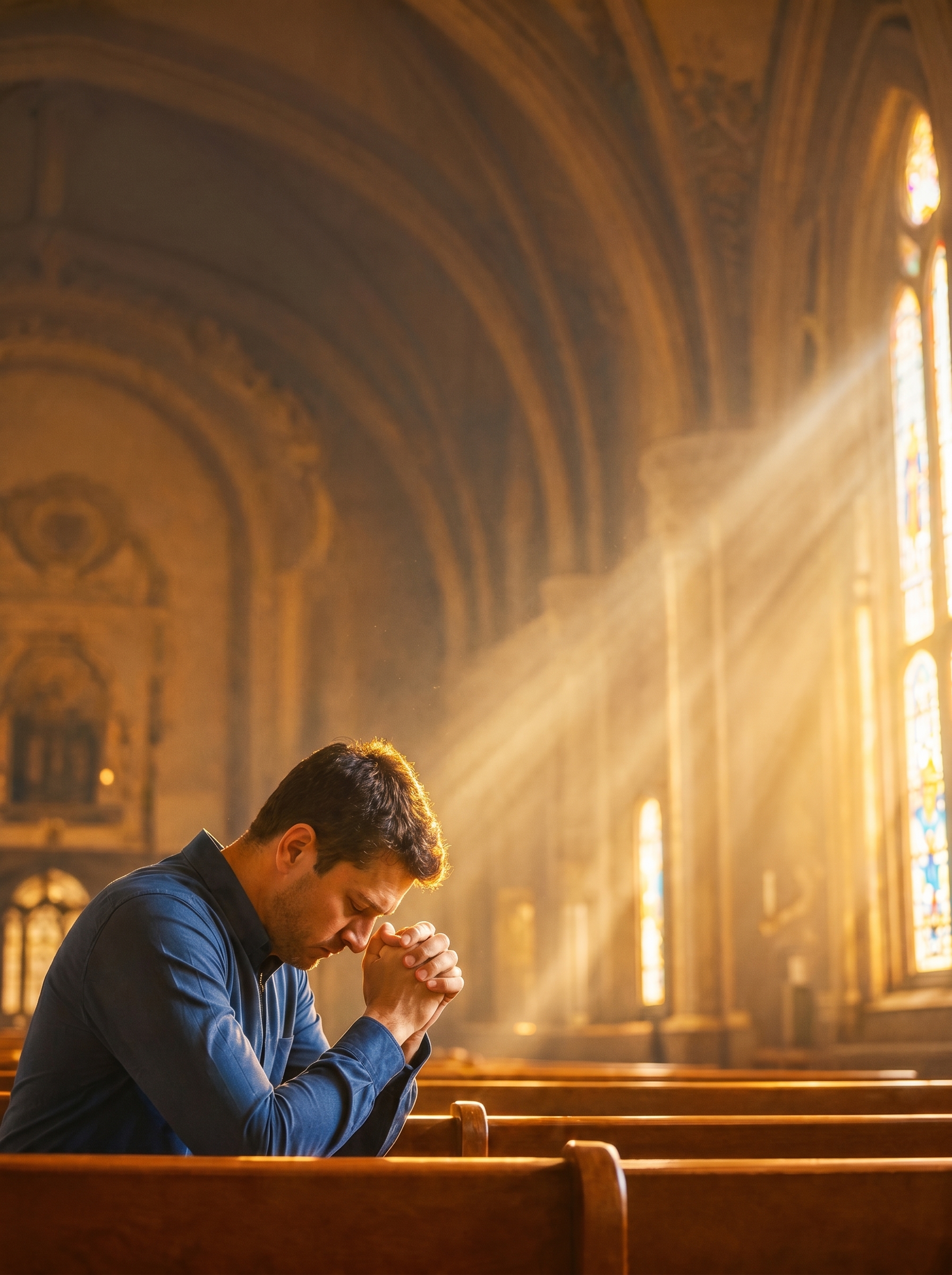
Welcome to the Champions Academy. This first session is a thorough introduction to LCRL's Champions for Religious Liberty Network — who we are, how the Academy works, and what you're joining. Start with the teaching podcast above, then work through the introduction below.
Start with the Podcast
A 19-minute teaching podcast is the main tool for this session. Everything below unpacks it — listen first, then read on.
The Two-Kingdom Idea
God engages the world two ways — to bless and preserve the culture now, and to save individuals for eternity. This is the heart of everything ahead.
Inside the Academy
Learning modules, group discussions, community engagement, book groups, prayer, and Bible study — the six ways a Champions Chapter learns and engages.
Why "Champions"
We champion religious liberty for everyone — even those who aren't religious — with a servant's heart, not a crusader's sword.
Vocabulary & Theme Verse
The terms every Champion should know (LCRL, LCMS, the Network) and our theme passage, 1 Peter 2:15–17, to learn by heart.
Knowledge Check
Ten questions to test and solidify what you've learned. Immediate feedback on every answer.
The Big Idea
What the Champions Network Is
The Champions Network is a growing network of individuals and groups who come together around one truth: God engages the world in two distinct ways.
Left-Hand Kingdom
To Bless & Preserve
God blesses the culture of this world in order to preserve it for now — using government, family, and society to keep the world ordered and safe. This is where civic life, moral law, and religious liberty belong.
Right-Hand Kingdom
To Save
God saves individuals from sin, death, and the devil through the saving Word of the Gospel. Jesus lived, died, and rose again on the third day to save people and take them to be with Him for eternity.
The Champions Network equips people to understand God's two-kingdom engagement and then to live it out — being faithful civic citizens as God's ambassadors. There is a network of people learning how to engage, and then engaging fellow citizens and governing authorities locally, at the state level, and finally at the federal level.
We can do so much more by networking together than we can do apart.
Everyone who signs up for the Champions Academy is called a Champion Apprentice — because, as in any trade or science, we learn before we do. From there, a 5-Stage Journey leads toward becoming everything you can be as a Champion Knight.
A Champions Chapter is a local group of Apprentices and Facilitators who meet — normally once a month — to learn together and practice engaging. You join the Academy through a subscription and an access code from your local facilitators.
No local chapter yet? LCRL's national staff will help you join a Special Online Chapter until one is founded near you.
The Educational Hub
Inside the Champions Academy
The Academy is the main educational hub for the Network. Almost everything you need is online; some sessions send you to a book or your local library. It's facilitated locally, in your Champions Chapter, through six kinds of learning.
Individual Learning Modules
Easy-to-follow modules you work through on your own, keeping pace with the other Apprentices in your chapter so discussion lands better.
Group Discussion Sessions
A once-a-month gathering to discuss what you learned, underscore the main points, and practice your conversation skills together.
Community Engagement Plans
We don't learn for learning's sake. Engagement Facilitators help you get involved in local civic affairs — slowly at first, then as God grows your confidence.
Book Discussion Groups
A Casual Reader and an Avid Reader list, organized by chapter Book Facilitators — often meeting at a local coffee house, which can turn out to be evangelistic too.
Prayer & Worship Opportunities
National Days of Prayer, election seasons, legislative sessions — a chapter Prayer Facilitator helps coordinate prayer, including going out to pray over your community.
Two-Kingdom Bible Study
As your chapter grows in knowledge and confidence, you help facilitate healthy two-kingdom Bible study resources for others in your congregation.
You access the Academy through a subscription, with an access code from your local facilitators. Remember — we are not just learning for learning's sake. We learn and grow so we can literally engage people in our own communities.
The Objective
Championing Liberty — For Others
Being a champion for religious liberty is not about conquering the world for Christ, as if launching a new season of the crusades. It is about championing religious liberty for others — even for those who are not religious or God-fearing.
This reflects the Founding Fathers — Madison and Jefferson — who held that freedom of conscience is a natural, unalienable right underpinning all other civil liberties.
"If the government can control what you believe, it can inevitably control what you say, write, and do."
The idea behind freedom of conscience
Champions are servant-minded, with a Christlike posture. Some of us are eager to charge ahead — like Peter, quick with a sword. But Jesus, reattaching the servant's ear, says, "No, not that way, Peter." So we take time to learn principles like Dynamic Differentiation, Reformation Restraint, and Vocational Respect — slowing down to see what God is already doing in His left-hand kingdom before we act.
Every Session
The Five-Fold Purpose
Every Champions Academy session works toward five purposes — each one a part of your time together.
Inspirational
Inspiring you to live out your calling as a champion for religious liberty.
Educational
Helping you understand, navigate, and depoliticize the issues of the day.
Prayerful
Guiding your learning into the Lord's calling for faithful, public living.
Social
Supporting one another — and others — in two-kingdom engagement.
Missional
Building an advocacy plan for your community, so everyone working small tasks together raises God's voice for the good of all.
Learning the Language
Champions Vocabulary
A few terms every Champion should know from this first session.
LCRLLutheran Center for Religious Liberty
Launched by the Lutheran Church—Missouri Synod in 2017. The Center provides education, advice, advocacy, and resources in the areas of life, marriage, and religious liberty — engaging in Washington, D.C. on behalf of our churches, schools, universities, and seminaries.
LCMSThe Lutheran Church—Missouri Synod
A conservative confessional Lutheran denomination established in 1847 by German immigrants, headquartered in St. Louis. Its teachings align with the historic Lutheran confessions in the Book of Concord. It is the second-largest Lutheran denomination in the U.S., with over 2 million baptized members.
Champions NetworkLCRL's two-kingdom network of citizens
LCRL is the LCMS's advocacy voice in Washington, D.C. A growing, two-kingdom-minded network of citizens magnifies the impact of the Church's advocacy — in the nation's capital and at state capitals around the country.
Learn It by Heart
Our Theme Passage
Begin learning the Champions Network's theme passage — 1 Peter 2:15–17 — by heart, one phrase at a time. Learn a phrase this week, add the next next week, and the third the week after. Say it over and over; then say it to your children, your parents, your neighbors.
1 Peter 2:15–17 (ESV)
"For this is the will of God, that by doing good you should put to silence the ignorance of foolish people.Live as people who are free, not using your freedom as a cover-up for evil, but living as servants of God.Honor everyone. Love the brotherhood. Fear God. Honor the emperor."
Week 1
"For this is the will of God, that by doing good you should put to silence the ignorance of foolish people."
Week 2 — add
"Live as people who are free… but living as servants of God."
Week 3 — add
"Honor everyone. Love the brotherhood. Fear God. Honor the emperor."
Go Further
Review & Resources
The podcast at the top is the main teaching. This short review video walks the same introduction again, and the full script is here to read or print.
5-Minute Review Video
Supplement Review — Session 1 · a short walk back through the introduction.
The teaching podcast is a NotebookLM conversation generated from Mark Frith's Session 1 script. The teaching is his; the podcast presentation is AI-assembled.
This Session's Step
Commit to Pray
Consider a place in your community you can visit — a school, a courthouse, a statehouse, a neighborhood. Commit to praying for the people there and the work they do. Write it down so you can hold yourself to it:
The place I'll pray over:
How I'll commit to praying for them:
Everything we do is God's work — so we lean into prayer, seeking His guidance for how we engage the people around us.
Knowledge Check
Session 001 Quiz
Ten questions on the introduction. You'll get feedback on every answer.
Question 1 of 10
The Champions Network is built on the truth that God engages the world in how many distinct ways?
Question 2 of 10
How does God accomplish His saving work?
Question 3 of 10
What is everyone who signs up for the Champions Academy called?
Question 4 of 10
The Academy lays out a journey toward becoming what?
Question 5 of 10
What is a Champions Chapter?
Question 6 of 10
Championing religious liberty means defending it for whom?
Question 7 of 10
Which Founding-Father idea grounds the Champions' view of liberty?
Question 8 of 10
Which is not one of the five-fold purposes of every session?
Question 9 of 10
What does LCRL stand for?
Question 10 of 10
What is the Champions Network's theme passage — the one to learn by heart?