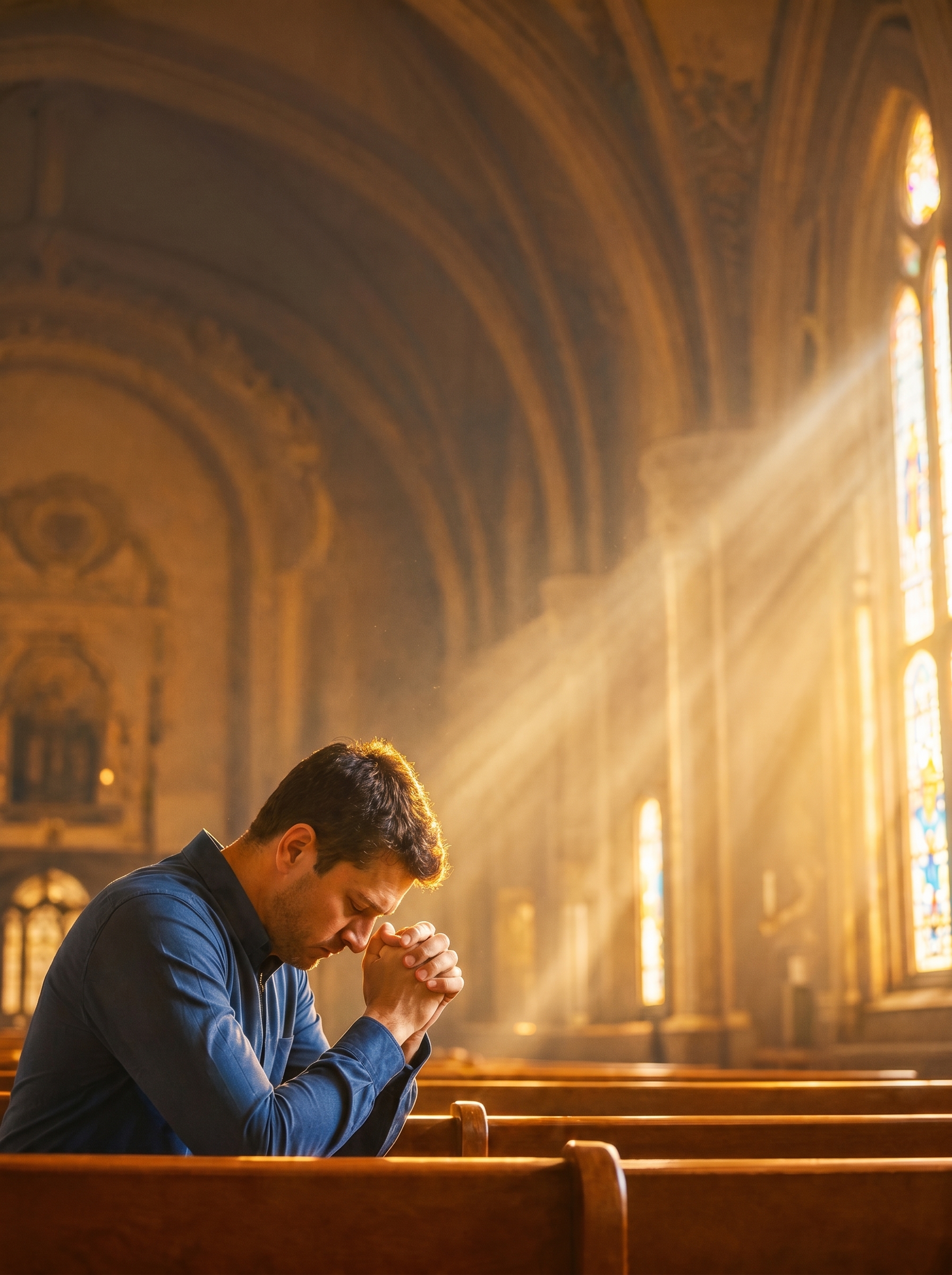
"Live as people who are free, not using your freedom as a cover-up for evil, but living as servants of God. Honor everyone. Love the brotherhood. Fear God. Honor the emperor."
— 1 Peter 2:15–17
What You'll Cover
Session 003 at a Glance
We add the second Champion Pillar and learn three principles that help us frame the cultural issues of our day — so that when we engage others, we can depoliticize the issue for the sake of better conversations.
Introduction to Session 3
Devotional
"Honor Everyone" — the hardest command in 1 Peter 2:15–17, and the dignity that makes it possible.
Pillar Two: Prayer
The second daily behavior of a Two-Kingdom Citizen. As advocates for God's left-hand causes, we lean into the Lord for counsel.
Three Core Principles
Dynamic Differentiation, Reformation Restraint, and Vocational Respect — the tools that frame how we engage.
Mom & Pop Papers
Paper #2 on Church & State for the roundtable, plus Papers #3 and #4 to carry into your Home Study.
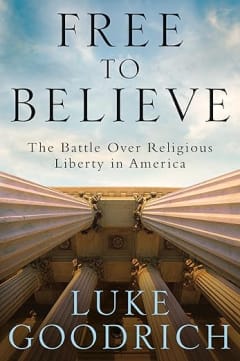
Free to Believe
Chapters 4 & 5 of Luke Goodrich's book — "Are We Under Attack?" and "Is Discrimination Evil?"
Knowledge Check
Ten questions to test and solidify what you've learned. Immediate feedback on every answer.
Segment 1 · Opening Devotional
Honor Everyone
"Devoted to Scripture and Prayer" is where we always begin — in the Word of God. Session 3 lingers on one short, difficult command in the middle of our guiding passage.
Peter does not tell us to honor only those who agree with us. He says honor everyone — a radical calling in a culture quick to dishonor. We can do it because every person carries the God-given dignity of His image.
1 Peter calls us to "live as people who are free… living as servants of God. Honor everyone." The freedom we have in Christ is meant to be spent in honor toward others — even those we disagree with.
"Honor everyone. Love the brotherhood. Fear God. Honor the emperor." — 1 Peter 2:17
How hard is it for you to "honor everyone," as St. Peter calls us to in this passage?
What are some of the main ways people dishonor one another?
What does "human dignity" have to do with you faithfully honoring everyone?
How might your Champions Chapter plan on cultivating honor in your community?
Champion Pillars
Pillar Two: Devoted to Prayer
Pillars are the daily activities and behaviors that help Two-Kingdom Citizens be faithful and courageous. The four pillars are Study, Prayer, Engagement, and Hospitality. Session 3 adds the second.
Session 2
📖
Pillar One
Study
Commit to being informed. Read, listen, learn.
Session 3
🙏
Pillar Two
Prayer
Lean into the Lord daily for His counsel and trust.
🗣️
Pillar Three
Engagement
Show up — in school boards, legislatures, and neighborhoods.
🤝
Pillar Four
Hospitality
Build relationships that open doors for truth.
The Pillar — Devoted to Prayer
Why Prayer Comes Second
Being devoted to prayer is nothing new for the Christian — God commands and invites us to pray for our daily needs. But as a Champion for Religious Liberty advocating for God's left-hand kingdom causes, it is just as important that we lean into our Lord for His counsel and trust. We do not engage culture in our own strength.
Prayer is one of the most important ways we engage our community — acknowledging that God is already at work, and asking Him to send us appropriately.
Pray for the leaders and public servants in your community
Pray over the cultural issues your Chapter is watching
Keep a running list of people and needs to lift up each month
Ask God for wisdom to know when to speak and when to wait
Home Study
How can you make sure you are leaning into the Lord daily in prayer as a Champion for Religious Liberty? Write it here so you can commit to it:
Segment 3 · The Heart of Session 3
Three Core Principles for Two-Kingdom Citizenship
These three principles help us properly frame the cultural issues of our day, so that when we engage others we can depoliticize the issues for the sake of better conversations. Click any principle to go deeper.
The Three Core Principles
1
Dynamic Differentiation
Organize your response along the lines of a temporal concern or an eternal one — looking for the difference in how God is acting: saving, or preserving order.
What kind of concern?
2
Reformation Restraint
Determine whether the Church should speak to this issue at all — pausing to see whether God may already be at work through others before we jump in to reform.
Should we speak?
3
Vocational Respect
Be cautioned on exactly how to be involved — honoring the vocations (parent, professional, public servant) through which God orders society.
How do we engage?
Segment 2 · Mom & Pop Paper Review
The Two-Kingdom Citizen, in Plain Language
Mom & Pop Papers are short articles covering the basic teachings of the Two-Kingdom Citizen. We review Paper #2 together at the roundtable; Papers #3 and #4 are for your Home Study. Learn them. Know them.
Video Highlight — Mom & Pop Paper #2
Two Kingdoms: Church and State?
Reviewed together in your group time. The heart of this paper is the healthy balance between the two kingdoms — and the danger when either one amasses too much power over the other.
What is the danger of the left-hand kingdom amassing too much power over the right-hand kingdom? When government oversteps into matters of conscience, faith, and worship, it claims authority God never gave it.
What is the danger of the right-hand kingdom amassing too much power over the left-hand kingdom? When the Church seizes the sword of the State, it confuses the Gospel with coercion.
What does it mean to put your temporal liberties to work for the Gospel? Our freedoms are not ends in themselves — they create room for the Good News to be proclaimed freely.
Home Study
Dynamic Differentiation
Review this Mom & Pop Paper several times this month. Learn it. Know it. Understand it. Then work through the discussion questions with a friend or two.
To be "dynamic" means to be actively engaged. How is God dynamic — actively at work — in the left-hand kingdom of order, law, and civic life?
How is God dynamic — actively at work — in the right-hand kingdom of Word, Sacrament, and saving faith?
The first line of the U.S. Constitution states that "We the People" establish the laws. How does that impact our being involved in the enactment and enforcement of these laws?
Home Study
Reformation Restraint
Review this Mom & Pop Paper several times this month. Learn it. Know it. Then discuss:
What does it mean to you to practice restraint when it comes to left-hand kingdom involvement?
What is the advantage of practicing restraint when it comes to responding to political, cultural, and social issues?
Why does the Christian practice restraint when it comes to open rebellion against a law?
Required Reading
Free to Believe — Chapters 4 & 5
Luke Goodrich moves from the foundations to the front lines: Is Christianity under attack? And is religious "discrimination" always evil? Learn these landmark cases well enough to tell them as stories.
LG
Luke Goodrich
Attorney · Becket Fund for Religious Liberty · Supreme Court Advocate
Practice sharing each case aloud, from memory. Being able to tell the story clearly is what equips you for the conversations already in your life.
Free to Believe
The Battle Over Religious Liberty in America · Luke Goodrich
Your copy is the required reading for the Champions journey. Read Chapters 4 & 5 for this session, then 6 & 7 before the next.
For the first time in American history, common Christian beliefs are increasingly viewed as incompatible with the prevailing culture — and Christians as a threat. Goodrich traces how the legal ground shifted.
Employment Division v. Smith (Al Smith v. Oregon)
Oregon outlawed all peyote use; surprisingly, the Court sided with the State — working around the "substantial burden" test and tossing out decades of precedent.
→ Led to the bipartisan passage of RFRA
Obergefell v. Hodges
For the first time, "the State" — five unelected justices — decided what marriage is, against centuries of precedent.
→ Raised new questions about religious freedom itself
Christian Legal Society v. Martinez
An important case to learn and be able to tell — on whether a public university may deny recognition to a religious student group over its membership standards.
A Shifting Culture Says…
› There is no absolute truth
› Abortion must be accepted
› Sexual autonomy must be approved
› Religion is less important — and more diverse
Key point: precedent can change in a moment's notice. Don't assume.
Is Discrimination Evil?
Not all "discrimination" is wrongful — sometimes choosing discriminately is essential to the job (a Jewish school hiring Jewish teachers, for instance). The question is whether the distinction is legitimate.
Title VII prohibits employment discrimination based on race, color, sex, national origin, or religion. Its religious exemption lets religious organizations hire individuals of a particular religion — relieving major governmental interference with their ability to define and carry out their mission.
Religious freedom is rooted in who we are as human beings: (1) free to search for transcendent truth, and (2) free to associate with others doing the same. The right of religious assembly has meant the right to determine one's beliefs, to establish internal rules of self-governance, and to choose one's own members and leaders.
Corporation of the Presiding Bishop v. Amos
Whether a religious organization can consider religion in employment, even for non-religious jobs, under Title VII.
→ Supreme Court ruled in favor of the Church
Hosanna-Tabor v. Perich
Does the First Amendment's "ministerial exception" protect a religious institution from employment-discrimination lawsuits?
→ Supreme Court ruled in favor of the Church
Current Events & Community Engagement
Depoliticize · Pray · Engage
Champions discuss the issues that matter most to them — striving to understand the facts and to depoliticize the issues, so that even when we disagree on solutions we refuse to demonize one another.
Current Events
Create a list of the issues and events your group wants to discuss. Strive to understand the facts. Work hard to depoliticize the issues — refraining from demonizing one another even where you disagree.
Community Engagement
Prayer is an important way we engage our community, acknowledging that God is already at work. Review the list of who you can be praying for in your community this month — and ask Him to send you appropriately.
Stay Informed
Track active religious-liberty cases through trusted resources, and bring what you learn back to the roundtable.
Take one current event your group named. Run it through the principles: Is this a temporal or eternal concern (Dynamic Differentiation)? Should the Church even speak to it, or is God already at work (Reformation Restraint)? And how do we engage while honoring the vocations involved (Vocational Respect)?
Depoliticizing an issue doesn't mean avoiding it — it means refusing to let partisan reflexes define it. When we lower the political temperature, we make room for honest conversation, honor the person across from us, and keep the door open for the Gospel.
Knowledge Check
Test Your Understanding
Ten questions from Session 003. Immediate feedback after each answer. See how you score — then revisit what you missed.
Question 1 of 10
Which Champion Pillar does Session 3 introduce?
Question 2 of 10
Session 3's devotional centers on which command from 1 Peter 2:15–17?
Question 3 of 10
What are the three core principles for Two-Kingdom citizenship?
Question 4 of 10
Dynamic Differentiation helps us organize our response according to whether a concern is…
Question 5 of 10
What does "Reformation Restraint" call us to do before jumping into a cultural issue?
Question 6 of 10
"Vocational Respect" extends which commandment to the vocations God uses to order society?
Question 7 of 10
In Free to Believe Ch. 4, which case saw the Court side with Oregon after it outlawed peyote — tossing out decades of precedent?
Question 8 of 10
Congress responded to that ruling by passing which law restoring strong protection for religious exercise?
Question 9 of 10
Title VII (discussed in Ch. 5) prohibits employment discrimination based on race, color, sex, national origin, and…?
Question 10 of 10
In Hosanna-Tabor v. Perich, the Supreme Court protected a church's right to choose its own ministers under which doctrine?